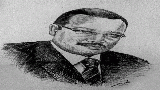
Farewell, My Dear Indian Friend.. Mohammed Qader Nawaz
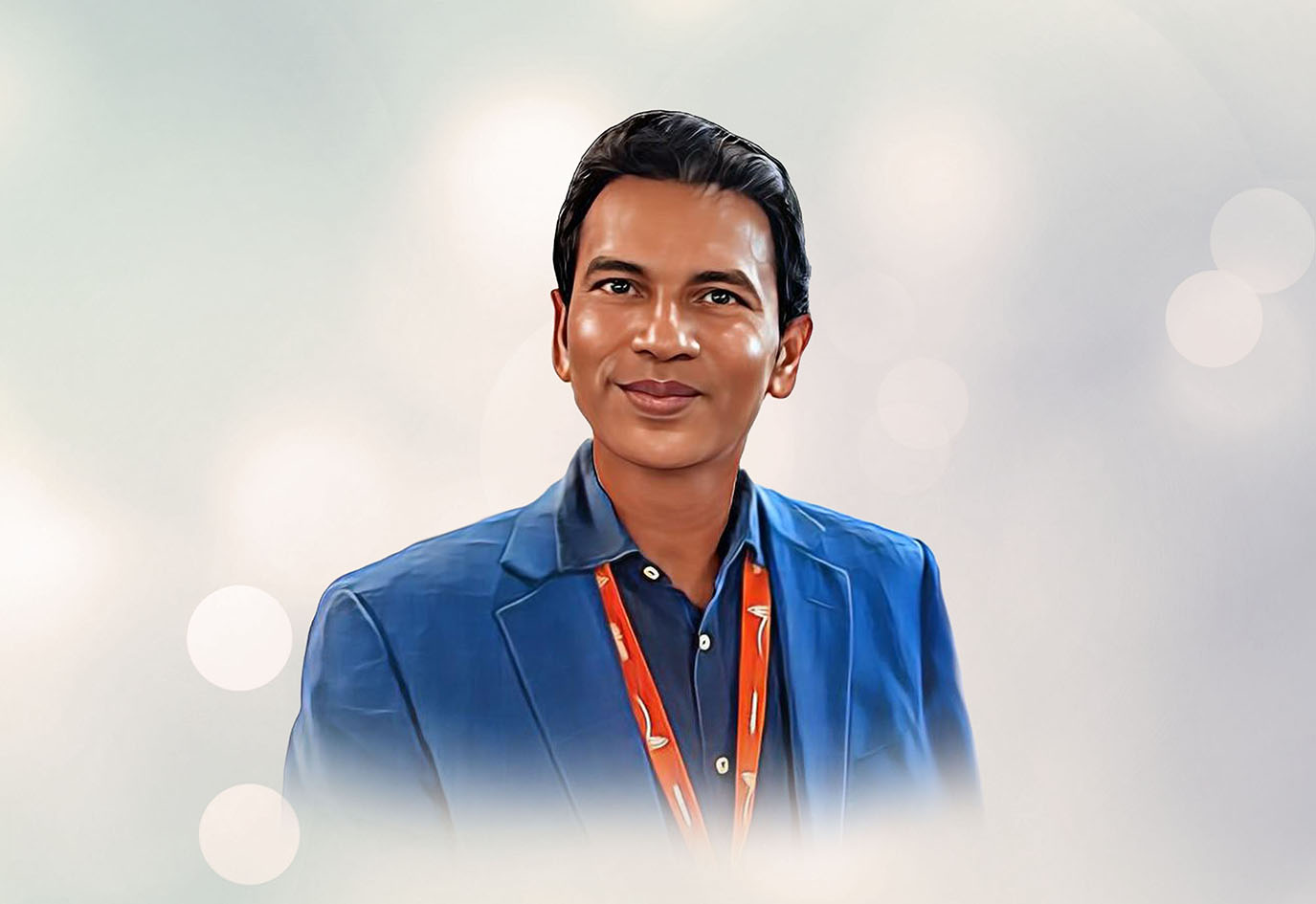
By Alamir Kamal Farag
“Mohammed Qader Nawaz” disappeared for several days, and I was not worried at first — that had always been his habit. He was restless like a sparrow fluttering around its nest, flying off to pick up a grain and then returning. He would vanish for a few days, then suddenly call me to say he was standing in front of my house. But this time, anxiety overtook me, and I do not know why. I called his mobile phone again and again with no answer. After several attempts, a woman answered — something unusual. At first, I thought I had dialed the wrong number, but then I learned she was his sister. I asked her, “Where is Nawaz?” She replied, “Nawaz died.”
“Nawaz” died suddenly, without farewell — he who was so gentle and courteous, always careful to excuse himself politely. He departed abruptly, for death is skilled in ambush. It snatches loved ones from your hands just as the wind snatches leaves from the trees.
I first met Nawaz at the media center of Expo 2020 Dubai. We became friends from the very first moment. He extended his hand to greet me, saying, “Mohammed Qader Nawaz.” When I was delayed at work, he said, “I will wait for you so we can leave together.” From that moment on, we were inseparable. For six months — the duration of the expo — we worked together, ate together, and attended events together. During those long months, I discovered his kind heart and beautiful character.
I always considered my friendship with him proof of the success of friendship between different cultures. In fact, I often felt that such friendships can sometimes be stronger and more meaningful than friendships within the same culture.
My Indian friend spoke Malayalam, and I spoke Arabic, but language was never a barrier between us. English became our middle ground. Although his English was not perfect, we spoke and debated everything — culture, politics, and life. The English we invented together produced strange and hilarious expressions. I understood half of what he said and missed the other half, so we spent much of our time constructing sentences, correcting them, and laughing. That experience helped improve my English, while I sadly failed to teach him Arabic — one of his greatest dreams.
“Nawaz” was the only person I called “my dear friend,” because I truly cherished this man. He possessed a rare collection of qualities seldom found these days: kindness, loyalty, integrity, and nobility. He was a model of the Indian Muslim who held firmly to his faith. In his eyes lived the sadness of villages and the burdens of the many poor people who drive Indian rickshaws in Mumbai and Kerala. He suffered deeply over what was happening to Muslims in India at the hands of Hindu extremists, and he often sent me painful videos documenting the violations they endured under the ruling circle of Narendra Modi.
I used to call him “my journalist, writer, critic, director, and actor friend,” because he truly was all of those things. Nawaz was multi-talented. He worked as a correspondent for an Indian newspaper called Metro, published in Malayalam, a language spoken by more than 35 million people across Kerala, Lakshadweep, Karnataka, the Andaman and Nicobar Islands, and among Indian workers in the Arabian Gulf.
For twenty years, he helped bring Sharjah’s cultural life to millions through his daily written and visual reports published in his Indian newspaper. He actively covered nearly every cultural event in the UAE, such as the Sharjah International Book Fair, the Sharjah Children’s Reading Festival, and the activities of Sharjah Police, among many others. Despite his long experience in journalism, he would rejoice like a child at the end of every event whenever he received a “Certificate.”
“Nawaz” held a special affection for Egyptians. He would show me pictures of his children in India and say, “They look Egyptian.” Then he would show me a picture of his wife and say, “She looks Egyptian.” He was always proud of his Arab friends, including “Haitham” from Syria and “Abdel Karim” from Egypt. He was Indian by nationality, but Arab in spirit.
I remember my first days in the UAE. Nawaz was present in every difficult moment. I remember when my health condition required an MRI scan. Nawaz drove me to the hospital and waited outside the room for forty-five minutes while I lay trapped inside the machine that resembled a grave. He was like a brother, family, and tribe all at once.
A year ago, I succeeded in bringing him to write for Al-Sahafa, and we began publishing his news reports in Malayalam. What was wonderful was that his reports consistently received high readership among the Indian community.
Nawaz’s dream was to launch his own Malayalam newspaper. He had already hired a company to design it, but financial costs stood in his way. He had planned to travel to India last month, and when I asked him when he would return, he assured me he would not be gone long. I believed him. But what happened was that he left without return.
“Nawaz” loved journalism deeply and devoted most of his time to it, despite earning almost nothing from it. He contributed to his Indian newspaper voluntarily, without pay. At the same time, he owned a small decoration agency in Ajman. Since journalism “does not even cover its own worries,” as the popular saying goes, he would be delighted whenever his agency secured a project.
In recent months, he had been happy about some work agreements with a man named “Sheikh Saeed.” From time to time, he would call me joyfully to tell me he was at the worksite. Just weeks ago, he called excitedly to tell me that his Syrian friend “Haitham” would return to the UAE to establish a company.
He was always eager to stay in touch with me and keep me informed of his movements through warm voice messages that began in proper Arabic: “Peace be upon you.” Even when his car broke down, he would send me pictures of it in the repair workshop. It was as if he insisted on remaining present in memory, because he somehow sensed that one day he would be forced into the great absence.
Mohammed Qader Nawaz — the man who filled space with love, loyalty, the values of true friendship, and the essence of beautiful tolerance — has departed. For the first time, the WhatsApp notifications announcing his voice messages throughout the day have fallen silent.
One day before Ramadan began, Nawaz invited me and several colleagues to dinner at a restaurant called “Comedor.” Strangely, he invited each of us by name, as though he were planning a farewell gathering. Despite the terrible weather and the floodwaters that carried us far away from the restaurant, he insisted on the invitation. Eventually, we ended up at “Al-Kalkha” restaurant in Al Majaz, Sharjah, where we spent a beautiful evening and took a group photograph together.
I look at that picture and remember his kindness in every place and every situation. And I realize that life is a very short journey. Each of us gets off at a predetermined station and appointed time. A person departs, but their fragrant memory and righteous deeds remain everywhere.
May God have mercy on my Indian Muslim friend, Mohammed Qader Nawaz, grant him the vastness of Paradise, and make his honesty, loyalty, and devotion to Islam and Muslims intercessors for him on the Day he meets his Lord. Truly, God is All-Hearing and Ever-Responsive.
 0
0
 0
0

 Hrad
Hrad  First
First  龙
龙  لابور
لابور  Bonjour
  Цезарь
  단위
단위  Mauer
Mauer  ताजमहल
  Paras
Paras  Flamenco
  De koningin
  Kolinda
  Firenze
  Keragaman
  Όμηρος
  luksus
  Hősök
Hősök  Rättvisa
  明るい太陽
明るい太陽  Wałęsa
  חזרה
חזרה  laranja
  Mevlevi
  Dunărea
  آزادی
آزادی  กรุงเทพฯ
  Karpaty